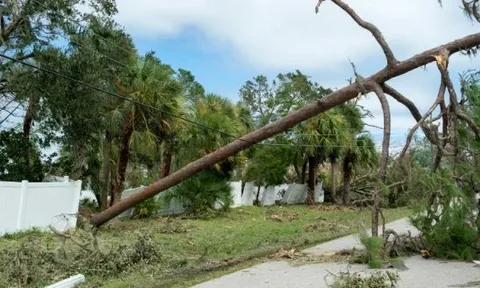
Hurricane season runs from June through November. And if you’ve lived in New York long enough, you know what that really means — downed limbs, cracked sidewalks, and trees lying across cars after a bad storm.
Planting the NYC most storm-resistant trees on your property isn’t just a landscaping decision. It’s a safety decision. The right tree bends in 80 mph winds. The wrong one snaps — and lands on your roof.
This guide breaks down exactly which trees hold up in NYC’s urban environment, which ones to avoid, and how to set them up for success before the next big storm rolls in.
Why NYC Is a Tough Place for Trees
New York City is hard on trees. Full stop.
The soil is compacted under decades of concrete and foot traffic. Root space is tight. Salt spray from coastal neighborhoods hits trees in Rockaway, Staten Island, and Howard Beach every year. Add in strong Atlantic storms and urban heat, and you’ve got a tough environment to survive in.
After Superstorm Sandy in 2012, NYC lost an estimated 10,000 trees in a single weekend. After Ida in 2021, flooding wiped out hundreds more. In both cases, the trees that fell shared the same traits — shallow roots, heavy canopies, weak wood, and poor placement.
That’s not bad luck. That’s a pattern. And it’s one you can avoid.
What Makes a Tree Storm-Resistant, Anyway?
Not all trees are built the same. Some species have flexible wood that bends without snapping. Others have deep root systems that anchor them through saturated soil. The best ones have both.
Here’s what separates a “survivor tree” from a “victim tree”:
Survivor traits:
- Deep taproot with wide secondary roots
- Dense, hard wood that resists splitting
- Compact or open canopy that lets wind pass through
- Slow growth rate — slower growth means stronger wood
Victim traits:
- Shallow root systems in compacted or wet soil
- Fast growth that produces brittle, weak wood
- Heavy, dense canopies that catch wind like a sail
- Multiple trunks competing at weak V-shaped crotches
Tree species matter a lot. But so does where and how you plant them. A great tree in the wrong spot is still a risk.
NYC’s Most Storm-Resistant Trees — The Best Options to Plant
1. Live Oak (Quercus virginiana)
This is the gold standard. University of Florida researchers ranked Live Oak as the single most wind-resistant tree species after studying post-hurricane damage across the Southeast. Its branches flex instead of snap. Its broad, low canopy is naturally aerodynamic. Its root system spreads wide and deep.
Live Oak also tolerates salt spray well — a big deal for coastal neighborhoods in Queens and Staten Island. It adapts to NYC’s Zone 7a/7b climate without issue. The trade-off is size: it needs serious root room, so it works best in large yards, parks, or open medians.
2. Bald Cypress (Taxodium distichum)
Few trees handle flooding like Bald Cypress. It’s one of the highest-performing trees in wind-resistance studies, and it thrives in wet, waterlogged soil — exactly the conditions that kill most other trees during a major storm.
It’s a deciduous conifer with a conical shape. That shape naturally sheds wind instead of fighting it. If your property sits near Jamaica Bay, tidal zones, or flood-prone streets, this is your tree. Plant it away from structures given its mature size of 50–70 feet.
3. Ginkgo (Ginkgo biloba)
There’s a reason the NYC Parks Department plants Ginkgo on thousands of city streets. This tree has been around for 200 million years. It’s survived everything.
Ginkgo has deep roots, dense wood, and exceptional resistance to both wind and ice storms. It handles compacted soil, air pollution, and salt with ease. For NYC’s urban environment, it’s one of the most proven performers. One tip: always plant male trees. Female Ginkgos produce fruit that smells terrible.
4. Southern Magnolia (Magnolia grandiflora)
Southern Magnolia performs consistently well in post-storm damage surveys. Its broad pyramidal shape lets wind move around it rather than through it. The leaves are thick, leathery, and evergreen — they hold on during storms better than most.
This species was once considered too Southern for NYC winters. Not anymore. Climate warming has pushed Zone 7 conditions firmly into all five boroughs. The ‘Bracken’s Brown Beauty’ cultivar is especially cold-hardy and compact — a great fit for residential yards.
5. Shumard Red Oak (Quercus shumardii)
If you want a native oak that won’t let you down, this is it. Shumard Red Oak develops a deep, wide root system over time. Its wood is dense and its structure is strong. It turns a brilliant wine-red in fall, which doesn’t hurt either.
It grows a bit faster than Live Oak but still develops solid wood. Best for large open yards, parkways, and suburban lots in the Bronx, Staten Island, or Queens.
6. American Holly (Ilex opaca)
Post-hurricane studies consistently rank American Holly among the least damaged tree species. Its conical evergreen shape naturally deflects wind. It stays green year-round, providing windbreak coverage even in winter.
At 15–30 feet tall at maturity, it’s perfect for residential backyards where space is limited. It also works well as a border tree near property lines — tough, beautiful, and functional.
7. Sweetbay Magnolia (Magnolia virginiana)
This semi-evergreen magnolia is the smaller, more adaptable cousin of Southern Magnolia. It tolerates wet soil well, making it a smart choice for low-lying NYC lots that collect runoff during heavy rain. Its compact habit fits tighter urban spaces, and its storm performance in research studies is nearly on par with its larger relative.
8. Crape Myrtle (Lagerstroemia indica)
Crape Myrtle earns its spot through flexibility. Its branches bend dramatically in high winds without snapping. The wood is tough and the tree bounces back quickly after storm events. Just know its limits — it has low salt tolerance, so keep it away from coastal neighborhoods. It thrives in inland Queens, Brooklyn, and Bronx neighborhoods. Regular pruning before storm season keeps it in peak shape.
Trees to Avoid Before Hurricane Season
Some trees are almost guaranteed to cause damage in a major storm. If you have any of these on your property, get them assessed by an arborist before June.
- Bradford/Callery Pear — splits at the trunk almost every time. The V-shaped branch unions are structurally weak by nature.
- Silver Maple — grows fast, but that fast growth produces light, brittle wood. Shallow roots make it easy to uproot in saturated soil.
- Weeping Willow — gorgeous near water, but shallow-rooted and prone to total failure in high winds near structures.
- European White Birch — brittle wood that ice and wind shred without much effort.
These aren’t bad trees everywhere. But in an NYC storm context, they’re liabilities.
How to Plant Storm-Resistant Trees the Right Way
Give Roots Space to Grow
A tree with a 30-foot canopy needs a 30-foot root spread. That’s not always possible in the city, but it’s the target. The more restricted the roots, the less anchored the tree. Avoid planting large trees over utility lines, near underground pipes, or within 15–20 feet of structures.
In tight urban spaces, look into structural soil cells — underground systems that create pore space for roots while supporting foot traffic above. NYC Parks uses them on major streetscapes, and they make a real difference in tree stability.
Plant in Groups, Not Alone
Solo trees take the full force of wind. Grouped trees shelter each other. Even planting three to five trees in a staggered cluster in your yard creates a mutual windbreak. Roots interweave underground, too — sharing territory and strengthening each other’s anchor.
Don’t plant them in a straight line. Stagger the spacing. A small grove in your backyard is both beautiful and structurally smarter than one big isolated tree.
Prepare the Soil Before You Plant
Urban soil is often compressed and nutrient-poor. Loosen it deeply before planting — at least two to three times the diameter of the root ball. Add organic material to improve drainage and air flow to roots. Avoid planting in low spots where water pools for days after rain, unless you’re choosing flood-tolerant species like Bald Cypress or Sweetbay Magnolia.
Pre-Storm Season Tree Care Checklist
Storm season is June through November. The window to prep is March through May — before heat and humidity set in.
Here’s what to do each spring:
- Prune dead and crossing branches. Dead wood is the first thing that flies in a storm.
- Check for co-dominant stems. Two trunks growing at a sharp V-angle are a structural weakness. An arborist can install cabling to reduce risk.
- Raise the crown. Removing lower branches reduces wind drag without harming the tree. Never “top” a tree — it creates worse hazards down the road.
- Mulch the root zone. A 3–4 inch ring of mulch keeps soil moisture stable and roots healthy. Keep mulch away from the trunk itself.
- Book an arborist inspection. If you have large trees near your home, a certified arborist should look at them before storm season. They can spot internal decay, root problems, and structural defects you can’t see.
If you have NYC street trees in front of your property, the NYC Parks Department offers free pruning services. Request it through their 311 system. It’s free, and it matters.
What Sandy and Ida Taught Us About NYC Trees
After Sandy, researchers found a clear pattern in which trees failed. Shallow-rooted trees in compacted sidewalk soil were the most likely to topple. Trees planted in oversized open soil areas did far better. Species mattered, but placement and soil conditions were just as important.
Ida brought a different lesson: flooding saturates the soil around roots and destroys root anchorage fast. Trees that looked healthy before the storm simply fell over because their roots had nowhere to grip. Flood-tolerant species planted in better-draining soil fared far better.
The takeaway is simple. Plant the right species. Give roots room. Prepare the soil well. Then maintain the tree every year — especially before June.
Quick Reference: NYC Storm-Resistant Trees at a Glance
| Tree | Size | Salt Tolerance | Flood Tolerance | Best For |
| Live Oak | Large | High | Moderate | Coastal yards, parks |
| Bald Cypress | Large | Moderate | Very High | Flood-prone areas |
| Ginkgo | Large | High | Moderate | Streets, urban spaces |
| Southern Magnolia | Large | Moderate | Low | Inland residential yards |
| Shumard Red Oak | Large | Moderate | Moderate | Large open yards |
| American Holly | Medium | Moderate | Low | Small backyards, borders |
| Sweetbay Magnolia | Medium | Moderate | High | Wet or tight urban sites |
| Crape Myrtle | Medium | Low | Low | Inland neighborhoods |
Conclusion: Plant Smart. Protect Your Property.
No tree is completely hurricane-proof. But the NYC most storm-resistant trees — Live Oak, Bald Cypress, Ginkgo, Southern Magnolia — give you a real fighting chance against the storms that hit this city every year.
The earlier you plant, the deeper the roots grow before storm season hits. And the more you maintain your trees each spring, the better they hold up when it matters.
If you already have large trees on your property and aren’t sure how they’d handle a storm, now is the time to find out — not after a branch lands on your car.
At Tree Services NYC, our ISA-certified arborists work across the Bronx, Manhattan, and all five boroughs. We inspect trees for structural risk, perform pre-storm pruning, and remove hazardous trees safely before they become a problem. Call us at (347) 956-8811 or request a free estimate online. We’re available 24/7 — because storms don’t wait for business hours.
Our team at Tree Services NYC loves helping clients prepare their properties for special occasions and events. If your plans take you to Las Vegas, consider arriving in style with a trusted Party Bus Las Vegas Rental service for a truly memorable experience.
FAQ,s
What are the NYC most storm-resistant trees for small backyards?
American Holly and Sweetbay Magnolia are excellent choices for tighter spaces. Both stay under 30 feet, have strong storm performance records, and handle urban soil conditions well. Crape Myrtle is another solid option for inland neighborhoods with limited space.
How far should I plant a storm-resistant tree from my house?
A good rule of thumb is to plant large trees at least 20 feet from your foundation and structures. Medium trees need at least 10–15 feet of clearance. The more root space a tree has away from structures, the deeper and wider its root system can grow — which is what keeps it stable in a storm.
Is Ginkgo really a good storm-resistant tree for NYC streets?
Yes, and NYC Parks agrees — Ginkgo is one of the most widely planted street trees in the city for good reason. Its deep roots, dense wood, and tolerance for urban stressors like compacted soil, salt, and pollution make it one of the toughest trees for NYC conditions. Always choose a male tree to avoid the odorous fruit.
When is the best time to plant storm-resistant trees in NYC?
Spring (March through May) and fall (September through October) are ideal planting windows in NYC’s Zone 7 climate. Fall planting allows roots to establish over winter before summer heat arrives. Either season works well for most of the species on this list.
How do I know if my existing trees are a storm risk?
Look for dead branches, cracks in the trunk, multiple competing stems at a V-angle, or signs of decay like soft wood, fungal growth, or hollow sections. Trees leaning toward structures after previous storms also deserve attention. The safest move is to have an ISA-certified arborist inspect your trees before June each year — they can catch problems you’d never spot from the ground.